C.C. Wei Confirms Evaluation of a Potential Plant in Texas; Why Is TSMC Seeking a Site Outside of Arizona?
October 16th, 2026 - 11:12 AM GMT+0000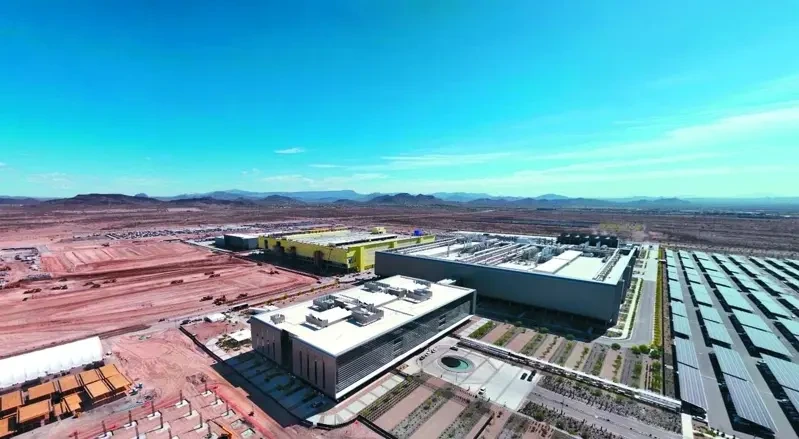
On the 15th, TSMC Chairman C.C. Wei confirmed that the company is evaluating the possibility of establishing a wafer fab in Texas. While he emphasized that this move is in response to client demand, he stopped short of committing to Texas as the final choice. Sources familiar with the matter revealed that TSMC’s search for an alternative site stems from a significant shift in the level of cooperation from the Arizona state government. Concerns regarding the certainty of project execution have prompted TSMC to consider Texas—a location offering greater cooperation—as a potential site for a second wafer fab.
C.C. Wei stated that since many of TSMC’s major clients are concentrated in the U.S., and given the active support provided by the U.S. government, the company is exploring expansion opportunities outside of Arizona. However, investigations suggest the situation is more complex; it involves ensuring the timely availability of essential operational resources—such as water, electricity, infrastructure, a skilled workforce, and a robust supply chain.
Given Arizona’s vast territory, why would TSMC need to look elsewhere? Following an earnings conference on the 15th, media outlets pressed for clarification on this strategic consideration. TSMC representatives explained that the Arizona facility must be built in phases according to the construction schedule; it is not feasible to establish full production capacity all at once. Should U.S. demand continue to grow, the company must consider securing a large-scale site capable of supporting long-term expansion.
Company representatives clarified that while a team has indeed been sent to Texas to scout locations, no final decision has been made to build a plant there. Other locations remain under consideration, and no formal plans have been finalized.
However, there may be more to the story. It is reported that the Arizona state government—previously highly cooperative—has now asked TSMC to independently resolve water and electricity requirements for the completed fab. Furthermore, if the company seeks state government assistance, it would be required to cede control over the construction process to the state. Such a move would effectively force TSMC to relinquish its authority over the project, introducing significant uncertainty regarding construction timelines, the commencement of mass production, and future operations. This has compelled TSMC to seriously evaluate the prospect of shifting its expansion plans to Texas.
Looking back at the history of TSMC’s investment in Arizona, the local government had initially played a pivotal role in facilitating the project. The Phoenix municipal government previously approved an infrastructure support package totaling approximately $205 million, which includes $61 million for roads, $37 million for water supply facilities, and $107 million for wastewater treatment.
Although the state of Arizona emphasizes that the region offers an excellent investment environment, its arid climate presents challenges; wafer manufacturing requires a stable water supply, reliable electricity, and a large pool of engineering and technical talent—all of which demand long-term investment. While TSMC has planned for on-site water recycling and the use of reclaimed industrial water, the availability of water, power, and labor remains a hurdle that must be overcome to expand production.